Introduction
Sensory play is one of the strongest foundations of Montessori education. Children learn best by using their hands, exploring textures, experimenting with objects, and observing how things work in the real world. At Uudaan Montessori Preschool, sensory experiences are woven into daily activities to support children’s curiosity, concentration, and overall brain development.
Montessori believed that “the senses are the gateway to knowledge.” Sensory play helps children refine these senses and build important cognitive, emotional, and physical skills.
- What Is Sensory Play?
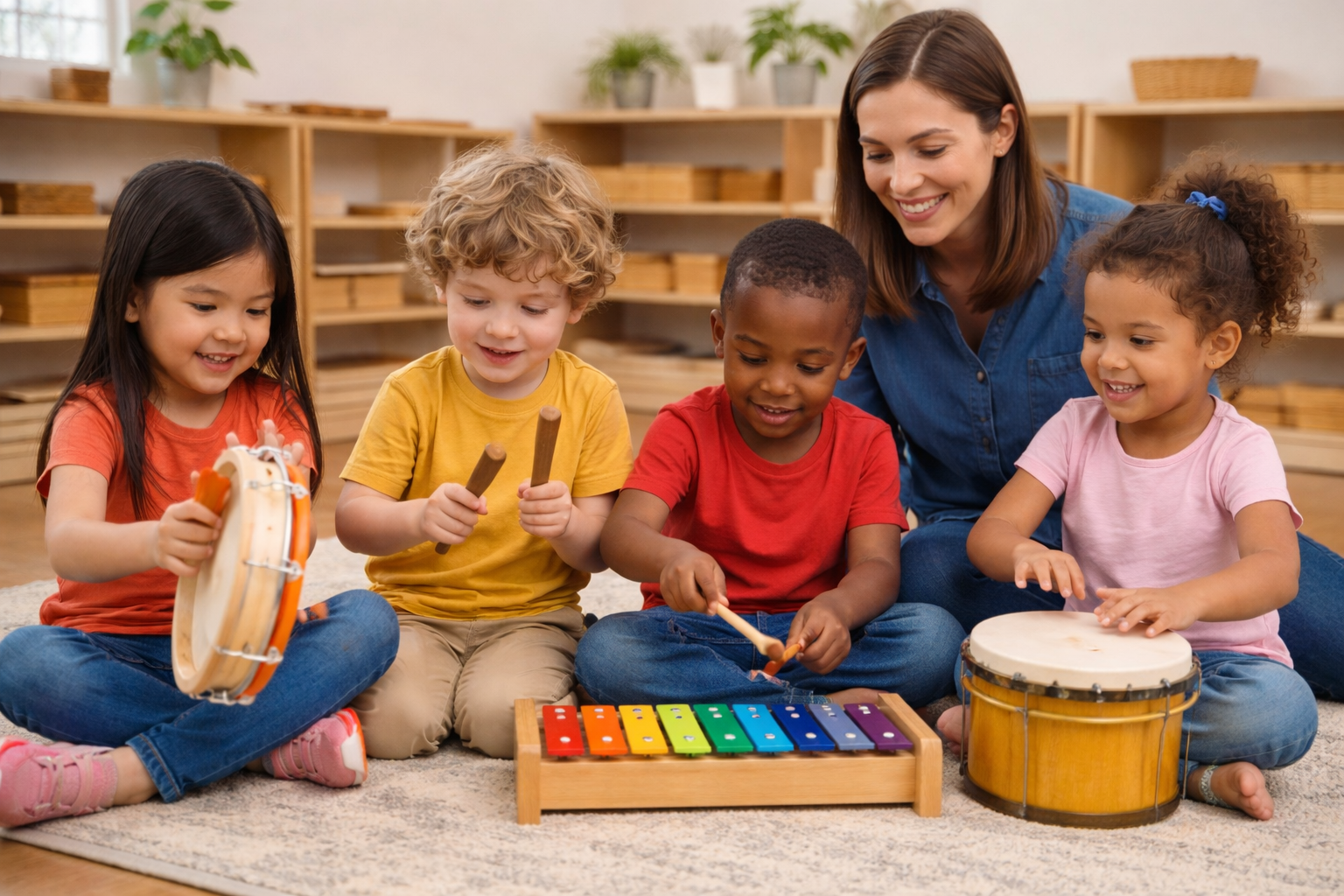
Sensory play involves activities that engage a child’s touch, sight, sound, smell, and movement. These experiences help children understand the world around them.
In Montessori classrooms, sensory materials are carefully designed to isolate specific concepts—such as size, color, weight, or sound—allowing children to focus, compare, and classify objects.
Examples include:
- Pink Tower: teaches size, balance, and visual perception
- Sound Cylinders: refine auditory discrimination
- Knobbed Cylinders: improve touch, grip, and hand–eye coordination
- Color Tablets: build visual memory and color recognition
Each material supports sensory development while strengthening fine motor skills and concentration.
- How Sensory Play Builds Cognitive Skills
Sensory experiences help children understand abstract concepts through hands-on exploration. When children touch, sort, pour, or compare objects, they learn patterns, sequences, similarities, and differences—all essential for math, science, and language development.
At Uudaan Montessori Preschool, sensory materials help children:
- Learn early math concepts like size, weight, and quantity
- Understand scientific observations
- Strengthen memory and problem-solving
- Improve ability to focus for longer periods
The structured nature of Montessori materials also teaches children to work step-by-step, which builds logical thinking.
- Strengthening Fine Motor and Practical Skills
Montessori sensory activities naturally support fine motor development, which later helps with writing, drawing, and self-care tasks.
Activities like:
- pouring grains or water
- transferring beads with tongs
- sorting objects
- opening and closing boxes
…all strengthen the small muscles of the hand.
This hands-on practice also encourages independence, as children gain control over their movements and learn to complete tasks on their own.
- Boosting Emotional and Social Development
Sensory play also helps children manage emotions and reduce anxiety. When children engage in calming activities—such as sand play, water pouring, or touching soft materials—they learn how to self-regulate.
In Montessori classrooms:
- Sensory work encourages quiet, focused concentration
- Children learn patience as they repeat activities
- They develop pride when they complete a task successfully
These experiences build confidence, emotional stability, and resilience.
- Why Sensory Play Matters at Uudaan Montessori Preschool
At Uudaan Montessori Preschool, sensory play is not just an activity—it is an essential method of learning. Every sensory material is introduced with purpose, allowing children to explore, process information, and gain control over their environment.
We ensure that:
- Materials are accessible and inviting
- Children can freely choose sensory activities
- Each activity builds essential life skills
- Learning happens through movement and discovery
Conclusion
Sensory play lies at the heart of Montessori education. It supports brain development, independence, emotional growth, and early academic skills. At Uudaan Montessori Preschool, we nurture children through thoughtfully designed sensory experiences that help them understand their world and develop into confident, capable learners.