In Montessori education, learning is not just about textbooks and worksheets. It is about engaging the whole child—mind, body, and emotions. One of the most effective ways to engage children in a Montessori classroom is through music and movement. These two elements are integral to the Montessori philosophy and help children develop crucial skills that extend far beyond just academics.
At Uudaan Montessori Preschool, we understand the importance of active learning, and we see firsthand how music and movement enhance children’s cognitive development, social skills, emotional growth, and physical coordination. In this blog, we’ll explore how music and movement play a vital role in Montessori education and why they are essential in early childhood development.
1. Enhancing Cognitive Development
Music and movement are more than just fun activities; they are powerful tools for cognitive development. In the Montessori method, music is not just for enjoyment—it is an essential part of learning. When children sing songs, play instruments, or follow rhythmic patterns, they are developing several cognitive skills, including memory, sequencing, and pattern recognition.
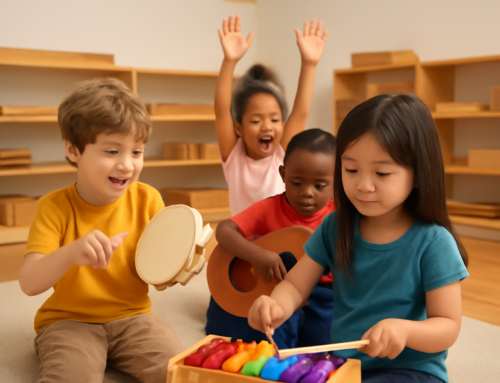
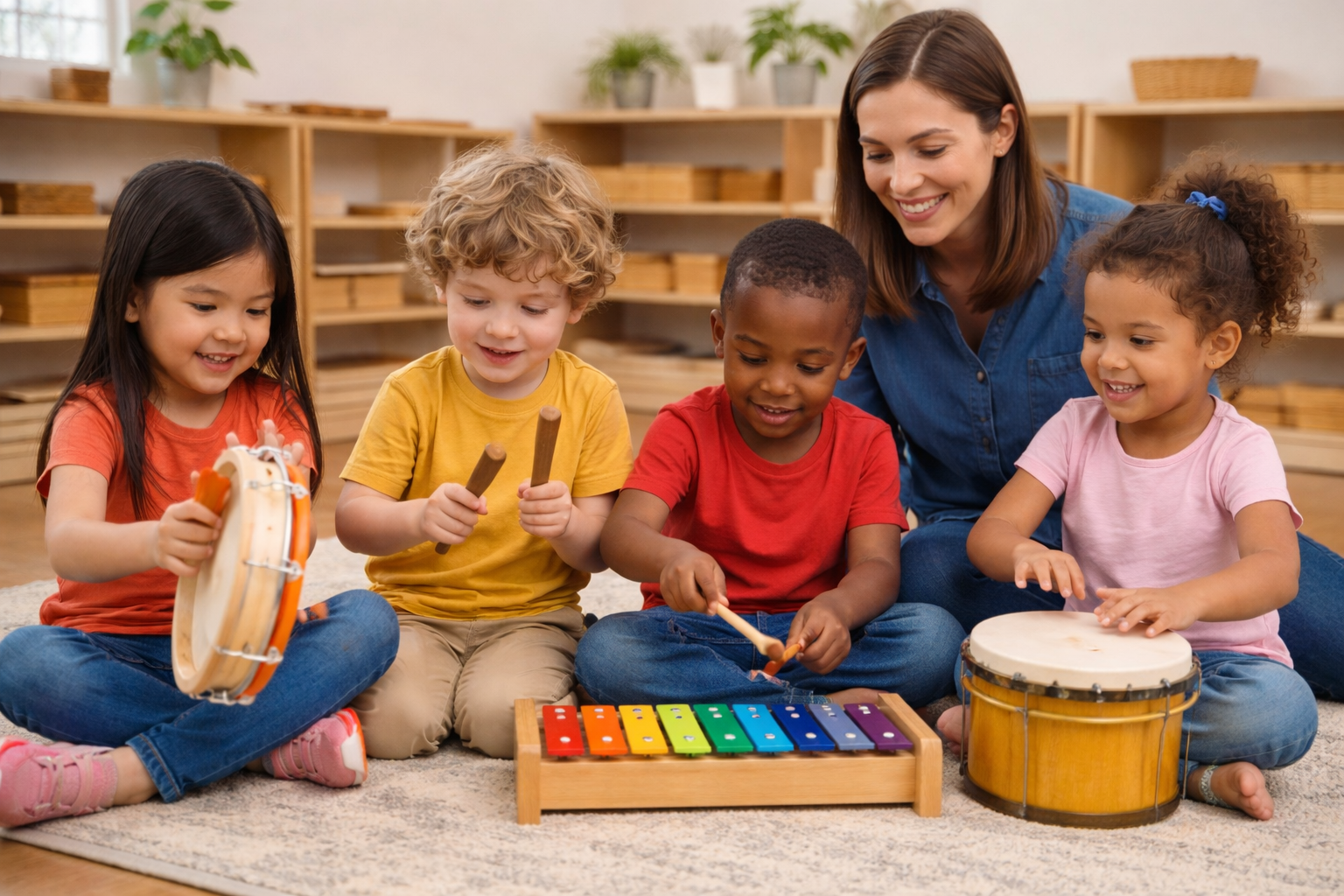
For example, rhythm exercises and singing songs help children recognize patterns, an essential skill for later learning in areas like mathematics and language. Learning to play instruments like tambourines, xylophones, or drums enhances a child’s understanding of sound, pitch, and auditory discrimination, which also supports language development.
At Uudaan Montessori Preschool, we incorporate music into our lessons to reinforce these cognitive concepts and help children build a strong foundation in critical thinking.
2. Promoting Physical Development
In Montessori, movement is not just a break from studying—it is an integral part of the learning process. Physical activities are embedded in daily routines to help children develop both fine motor skills and gross motor skills. Whether it’s dancing, jumping, or using hand gestures during action songs, music and movement contribute significantly to a child’s physical coordination.
Music and movement activities at Uudaan Montessori Preschool include:
-
Dance and rhythm activities that help with balance, coordination, and flexibility.
-
Action songs that involve hand and body movements, helping children build gross motor skills.
-
Fine motor tasks like finger play and manipulating musical instruments, which enhance hand-eye coordination.
These activities promote physical health, agility, and strength while also teaching children to focus, follow directions, and practice patience.
3. Fostering Emotional Growth
Music and movement provide an excellent outlet for children to express and understand their emotions. In Montessori education, emotional expression is valued as much as academic achievement. Music, with its rhythms, melodies, and lyrics, helps children understand and articulate feelings in a way that words alone cannot always do.
When children engage in expressive music activities—whether it’s through singing, dancing, or playing an instrument—they learn to:
-
Express emotions through creative movement or song.
-
Develop emotional resilience by engaging in repeated activities and reflecting on their experiences.
-
Calm themselves through soothing music and rhythmic movement.
At Uudaan Montessori Preschool, we encourage children to explore their emotions through music and movement, helping them become emotionally intelligent individuals who can recognize, understand, and manage their feelings.
4. Building Social Skills and Cooperation
Music and movement are highly social activities. In the Montessori classroom, children often work together during music or movement-based activities, which helps them develop important social skills such as cooperation, turn-taking, and sharing. These activities provide opportunities for children to learn how to work as a team, support one another, and listen to others’ ideas.
When children perform group dances, sing together, or share instruments, they practice working together harmoniously, which builds their confidence and enhances their ability to engage in group activities. These social interactions create a positive environment where children feel comfortable expressing themselves and working with others.
At Uudaan Montessori Preschool, we focus on encouraging collaboration through group music sessions, which teach children the value of cooperation, listening, and respecting others.
5. Encouraging Creativity and Imagination
Montessori education fosters creativity by providing children with the freedom to explore and express themselves in unique ways. Music and movement activities, especially those involving improvisation or role-playing, allow children to engage their imagination and creativity. Whether it’s creating their own songs, inventing dance moves, or telling stories through music, these activities open the door to limitless creative expression.
By exploring musical instruments, experimenting with different rhythms, and interpreting movement in new ways, children become more confident in their ability to express their ideas and explore different avenues of creativity.
At Uudaan Montessori Preschool, we encourage children to be imaginative through musical exploration and movement-based storytelling, helping them develop their creative skills for the future.
Conclusion
The role of music and movement in Montessori learning cannot be overstated. These activities contribute to cognitive development, physical coordination, emotional growth, and social interaction, all of which are essential components of a well-rounded education. At Uudaan Montessori Preschool, we understand that learning should be a dynamic, engaging, and multi-sensory experience. That’s why we incorporate music and movement into our daily routines, ensuring that every child has the opportunity to develop the skills they need to succeed in school and life.