Conflict resolution is an essential life skill that plays a vital role in how children develop their social skills, empathy, and ability to navigate the challenges of the world around them. In Montessori education, conflict resolution is approached with patience, respect, and a strong focus on communication. At Uudaan Montessori Preschool, we incorporate conflict resolution into daily activities, helping children learn how to handle disagreements in a positive and productive way.
Montessori education encourages children to work through conflicts independently, fostering emotional growth and a sense of responsibility. In this blog, we will explore how Montessori approaches conflict resolution and how it helps children build critical social skills for the future.
1. The Montessori Philosophy of Peace and Respect
The Montessori approach is rooted in peace education, where children are taught to respect each other’s feelings and perspectives. In the Montessori classroom, peaceful problem-solving is an important aspect of the learning process. Teachers guide children to express their emotions, understand others’ points of view, and find amicable solutions.
At Uudaan Montessori Preschool, the environment is designed to promote peace:
-
Calm spaces: The classroom is calm and organized, encouraging children to regulate their emotions and behavior.
-
Respect for others: Children are taught to listen respectfully, express their feelings without aggression, and engage in thoughtful dialogue.
The goal is to help children understand that every person deserves to be treated with respect, and conflicts can be resolved without anger or frustration.
2. Encouraging Children to Express Their Emotions
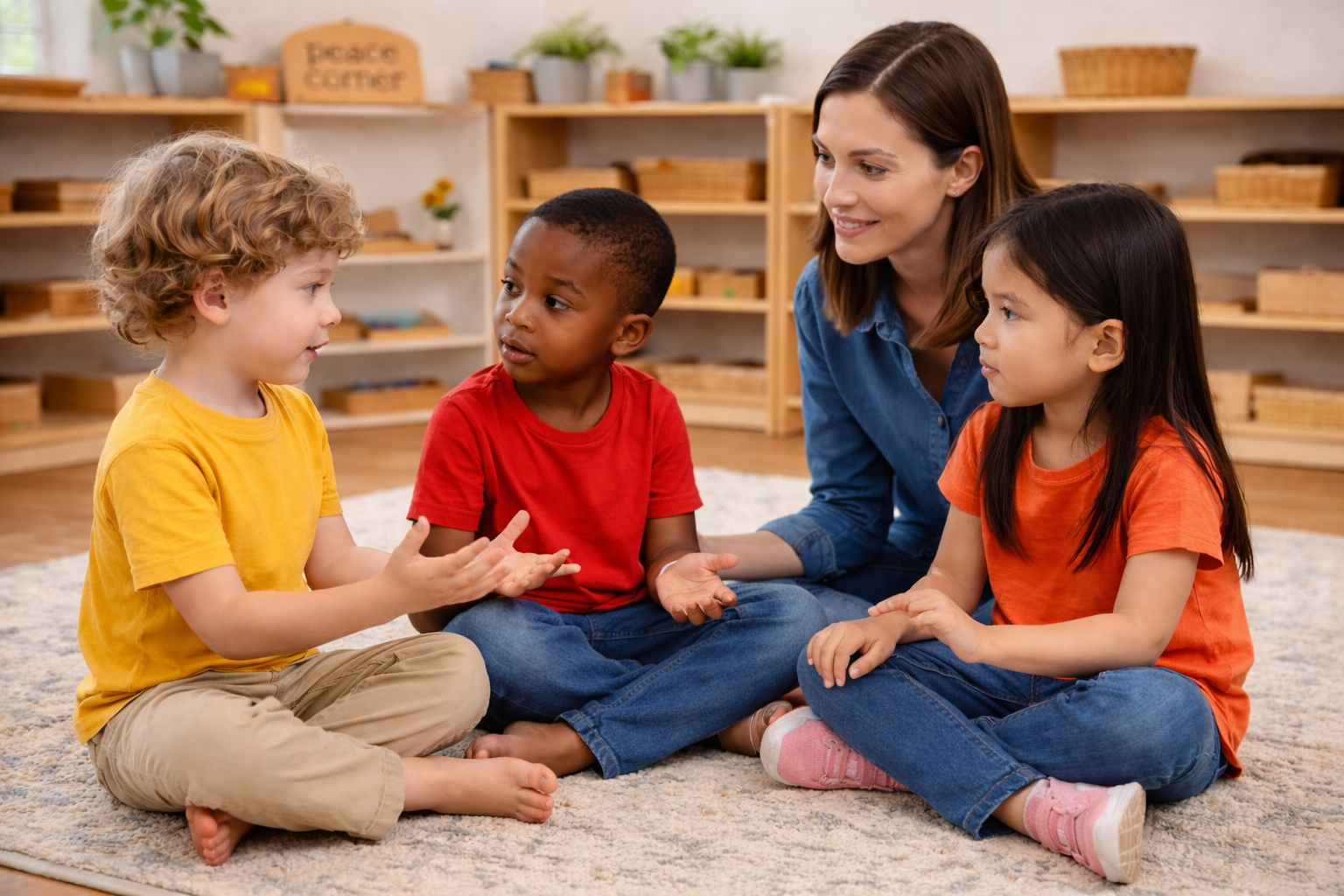
One of the first steps in conflict resolution is helping children identify and express their emotions. Montessori education encourages children to articulate their feelings, which is essential in understanding the root cause of conflicts. Instead of using physical or verbal aggression, children are encouraged to talk about what they are feeling and why they are upset.
For example, when a disagreement arises, the Montessori teacher might say:
-
“It looks like you’re feeling upset. Can you tell me why?”
-
“How do you think your friend is feeling?”
This approach allows children to communicate their feelings and empathize with others, setting the foundation for effective conflict resolution.
3. Role of the Montessori Teacher as a Guide
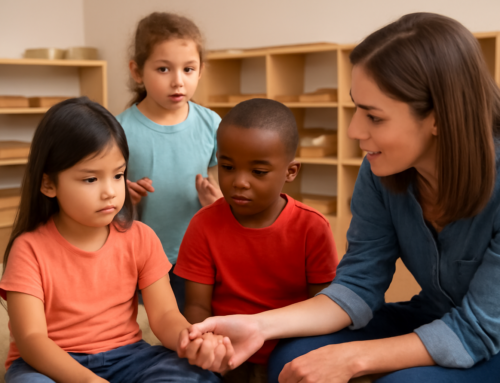
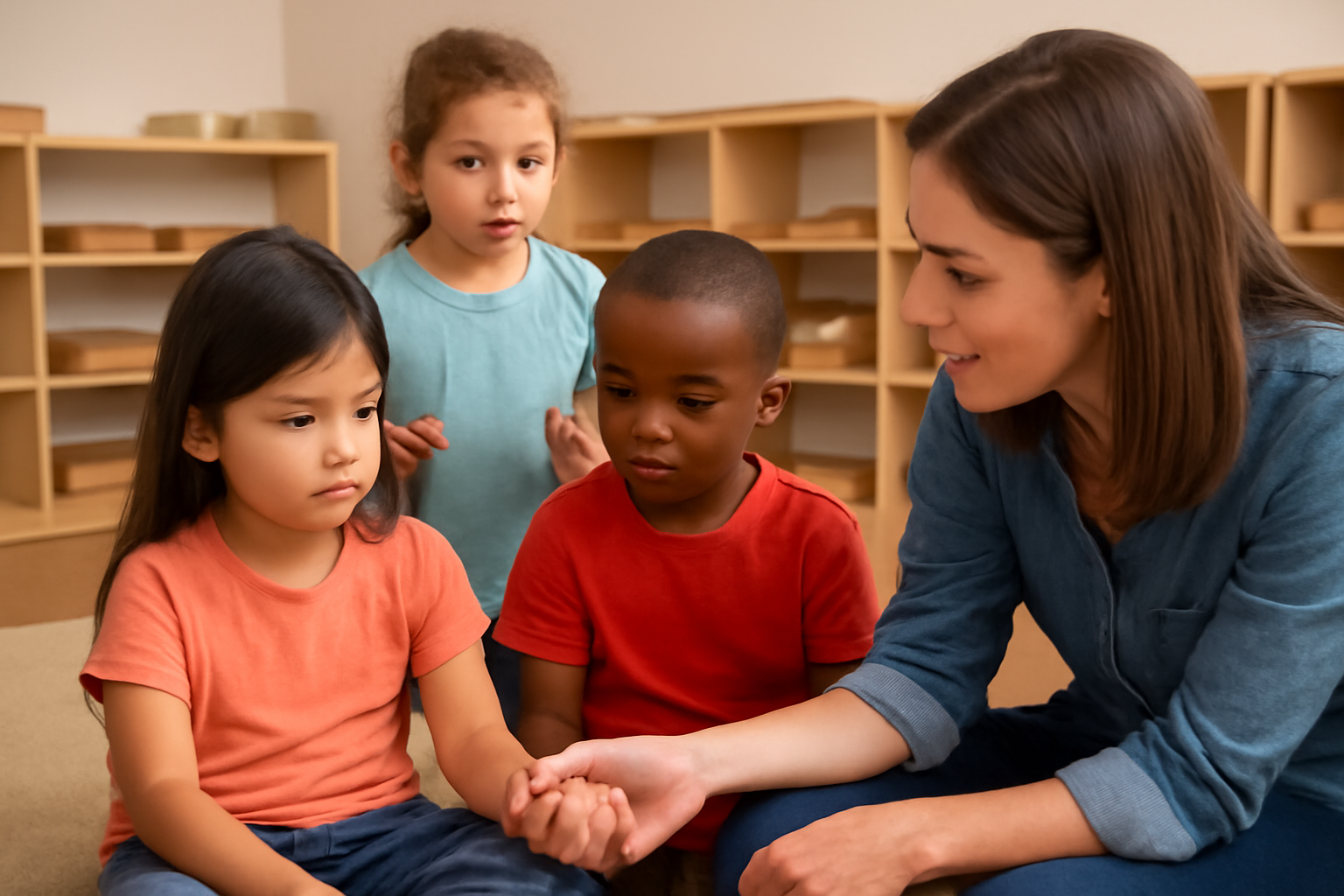
In Montessori classrooms, teachers act as guides rather than disciplinarians. When conflict arises, teachers don’t immediately intervene. Instead, they give children the tools and space to work through their problems independently. This process helps children learn to resolve conflicts on their own, fostering self-confidence and problem-solving skills.
The Montessori teacher will:
-
Observe the situation quietly and only intervene if needed.
-
Offer suggestions or guidance when the children are ready to resolve the conflict on their own.
-
Teach positive language that encourages cooperative behavior, like saying, “I feel hurt when you take my toy. Can we find a way to share it?”
At Uudaan Montessori Preschool, teachers are trained to offer gentle guidance and encourage children to come up with their own solutions to conflicts.
4. Teaching Empathy and Perspective-Taking
Empathy is an essential part of conflict resolution. Montessori education teaches children to recognize and understand other people’s feelings. By encouraging perspective-taking, children learn how to see situations from other people’s viewpoints, which is crucial in resolving conflicts peacefully.
For instance, when two children disagree over a toy, the teacher might say:
-
“Can you think about how your friend might be feeling when they can’t play with the toy?”
-
“How would you feel if someone took something from you?”
By learning to consider others’ feelings, children develop empathy and gain a deeper understanding of how their actions affect others.
5. Encouraging Collaborative Problem-Solving
In Montessori classrooms, children are encouraged to work together to solve problems. This collaborative approach helps them understand that conflicts are not about winning or losing, but about finding solutions that work for everyone involved. Instead of relying on an adult to solve the problem, children are guided to discuss and negotiate to reach a mutually agreeable solution.
For example, if two children are fighting over a toy, they might be encouraged to:
-
Take turns
-
Use “I” statements to express their feelings
-
Suggest an alternative solution, such as playing with the toy together
This process teaches teamwork, negotiation, and compromise—important skills for both social and emotional development.
6. Creating a Safe and Supportive Environment
A key principle in Montessori conflict resolution is creating an environment where children feel safe to express themselves without fear of judgment or punishment. By promoting emotional safety, children are more likely to engage in open and honest communication, allowing them to work through conflicts with greater ease.
At Uudaan Montessori Preschool, we emphasize the importance of:
-
Active listening: Encouraging children to listen carefully to each other’s feelings and concerns.
-
Non-judgmental communication: Ensuring that every child’s voice is heard and respected during a conflict.
This environment fosters a sense of belonging and trust, which is essential for conflict resolution.
Conclusion
Montessori education provides children with the skills and confidence they need to resolve conflicts in a positive and constructive manner. By focusing on respect, empathy, and collaboration, Montessori teaches children that disagreements can be solved through understanding, communication, and cooperation. At Uudaan Montessori Preschool, we are committed to guiding children through the process of conflict resolution, helping them develop the social skills they will carry with them throughout their lives.