In today’s fast-paced world, a child’s success is no longer measured by academic scores alone. Emotional intelligence (EQ)—the ability to understand, express, and manage emotions—is becoming just as crucial. At Uudaan Montessori Preschool, we believe in nurturing not only cognitive development but also the emotional well-being of every child. Montessori education, with its child-centric philosophy, naturally cultivates emotional intelligence from the very beginning.
Let’s explore how Montessori education encourages emotional growth and builds a strong foundation for emotionally intelligent individuals.
- A Calm and Respectful Environment
Montessori classrooms are designed to be peaceful, orderly, and welcoming. The ambiance itself promotes emotional regulation. Soft lighting, gentle tones, and predictable routines help children feel secure and respected.
In this environment, children are encouraged to observe, think, and make decisions calmly. The lack of chaos reduces anxiety and overstimulation, allowing them to process their emotions with clarity and mindfulness.
- Freedom Within Limits Builds Self-Awareness
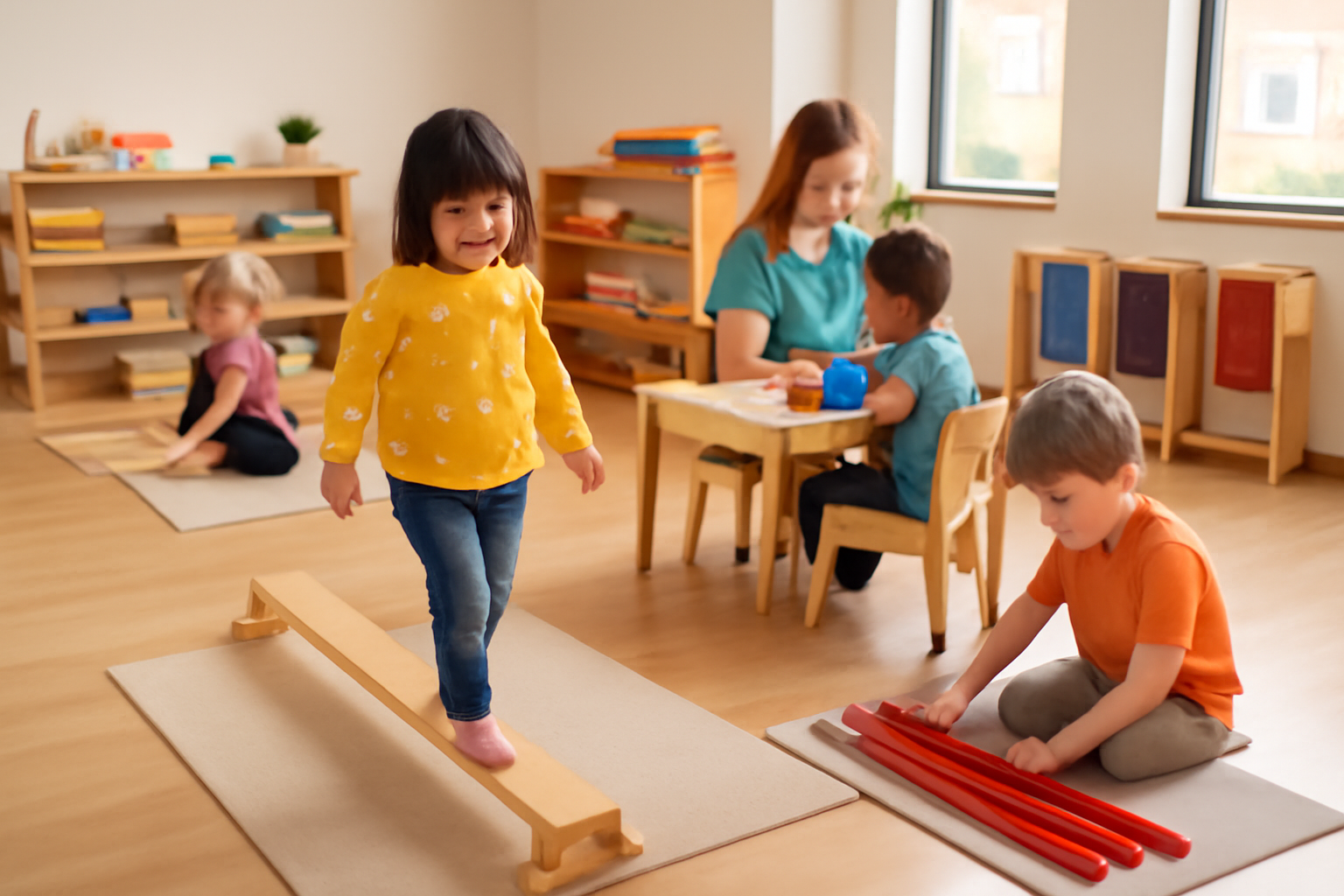
Montessori education emphasizes freedom within limits—children choose their activities from a range of prepared options. This autonomy helps them identify what they like, what they’re good at, and how they react to different tasks. Over time, they become more aware of their own emotional responses, such as frustration during a puzzle or joy when completing a challenging task.
This growing self-awareness lays the groundwork for recognizing and managing emotions, which is the first pillar of emotional intelligence.
- Grace and Courtesy Lessons: Social-Emotional Learning in Action
In every Montessori setting, children are explicitly taught grace and courtesy. These are simple but powerful social behaviors—like saying “please,” “thank you,” waiting for their turn, or gently resolving conflicts.
These lessons help children:
- Understand social cues
- Empathize with others
- Communicate respectfully
At Uudaan Montessori Preschool, we integrate these practices into daily routines, encouraging empathy, patience, and respect.
- Mixed-Age Classrooms Promote Empathy and Leadership
One of the hallmarks of Montessori education is the mixed-age classroom. Children of different ages learn and play together, creating a unique opportunity for emotional growth:
- Younger children learn from observing older peers.
- Older children develop patience, compassion, and leadership as they guide their juniors.
This dynamic fosters empathy—a key element of emotional intelligence—as children learn to understand and respond to the feelings of others.
- Freedom to Express Emotions Without Judgment
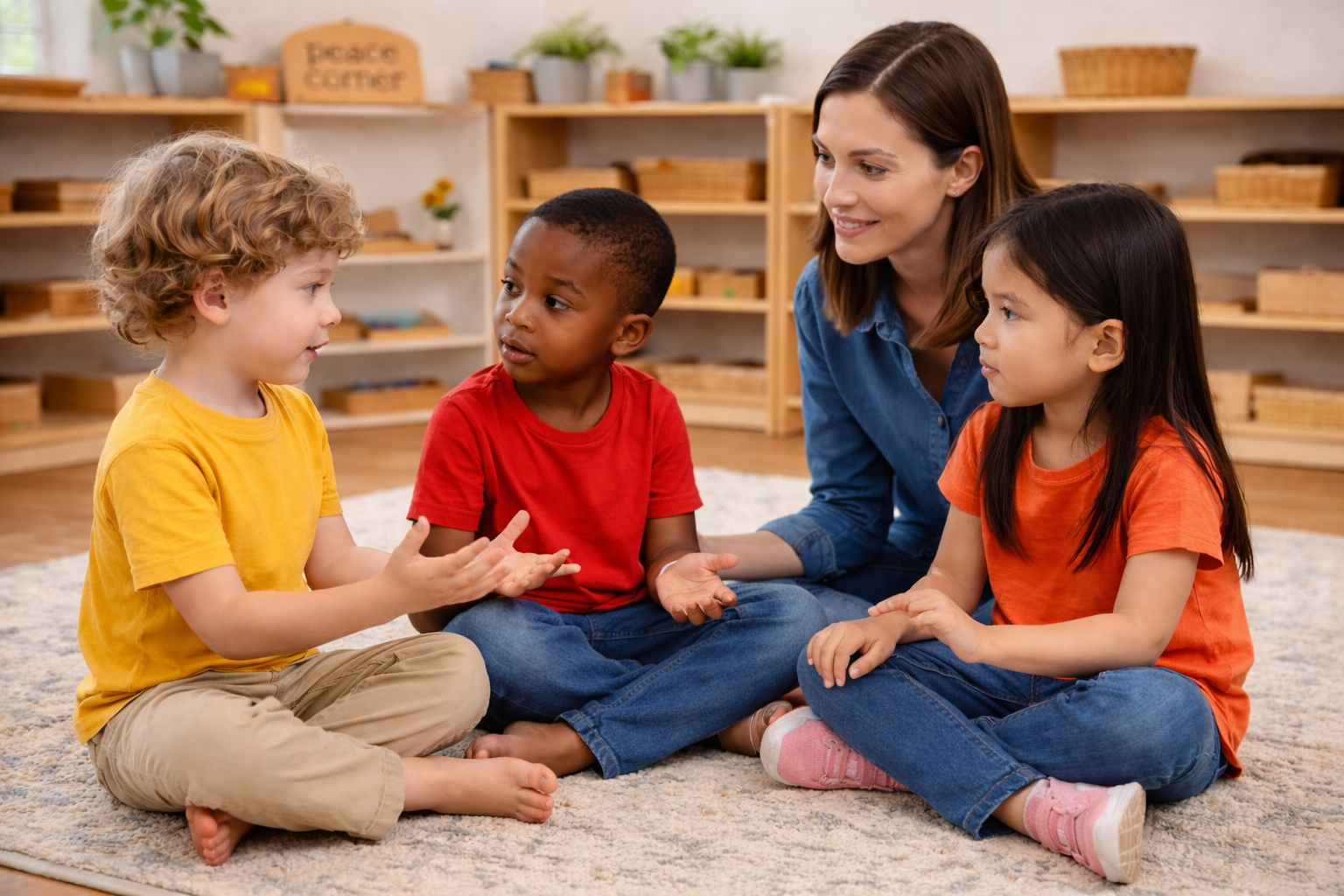
In a Montessori environment, emotions are never dismissed or punished. Children are allowed—and encouraged—to express how they feel. Whether it’s sadness, anger, excitement, or frustration, teachers acknowledge these feelings and help children label them accurately.
Instead of saying, “Don’t cry,” a Montessori teacher might say, “I see you’re feeling upset. Do you want to talk about it?” This respectful approach helps children learn that all emotions are valid and manageable.
- Hands-On Activities Teach Patience and Focus
Montessori materials are designed to be engaging, hands-on, and purposeful. They often require careful attention, repeated effort, and patience—qualities that help children develop emotional regulation. As they complete tasks, they experience pride, learn to cope with mistakes, and understand the value of persistence.
Activities like pouring, sewing, or building develop not just fine motor skills, but also internal discipline and emotional resilience.
- Mindful Conflict Resolution
Montessori teachers act as calm guides rather than strict authorities. When conflicts arise, children are encouraged to express their concerns respectfully and listen to the perspectives of others.
At Uudaan Montessori Preschool, we guide children through simple steps like:
- Stating how they feel
- Explaining what happened
- Listening to the other child
- Finding a peaceful solution together
This process teaches problem-solving, empathy, and communication—all essential EQ skills.
- Role of Teachers as Emotion Coaches
Montessori teachers are trained to observe rather than intervene unnecessarily. They gently guide children to understand their feelings, cope with setbacks, and celebrate achievements.
Instead of reacting with anger or frustration, Montessori educators model calm behavior, helping children mirror the same emotional regulation in their own lives.
At Uudaan, our teachers serve not just as educators but as emotional role models.
Conclusion
Montessori education is not just about alphabets and numbers—it’s about nurturing whole, balanced human beings. Emotional intelligence is the bridge that connects academic knowledge to real-world success and relationships. By allowing children to explore their feelings, make choices, and interact respectfully with others, Montessori methods lay the foundation for a lifetime of emotional well-being.
At Uudaan Montessori Preschool, we believe that when children are emotionally secure, they are more confident, curious, and capable. That’s why emotional intelligence is at the heart of everything we do—from classroom design to daily routines.
If you’re looking for a school that nurtures both mind and heart, visit us at Uudaan Montessori Preschool. For more information